After finishing day four with the Erris Head Loop Walk, we had one thing missing from our Ireland trip: a proper beach day. The weather had ruled it out the day before, so on day five we tried again, this time at Rossnowlagh Beach in south Donegal, one of the few beaches in Ireland where you can drive on the beach and park right on the sand. In this post we cover how driving and parking on the beach works, why you need to check the tides, what to know about dogs, lifeguards and overnight stays, and whether it’s worth the stop.
Rossnowlagh Beach at a glance
- LocationSouth Donegal on Donegal Bay, about 8 km north of Ballyshannon, on the Wild Atlantic Way
- ParkingFree, directly on the sand, no height barrier. No problem with our Tourneo Custom
- Entry feeFree
- Time neededWe spent about 2 hours on the beach
- FacilitiesToilets and food/coffee nearby; lifeguards in summer (June–September)
- Overnight?No, not on the beach
- DogsNo
- Worth it?Yes, parking on this beautiful beach is the highlight
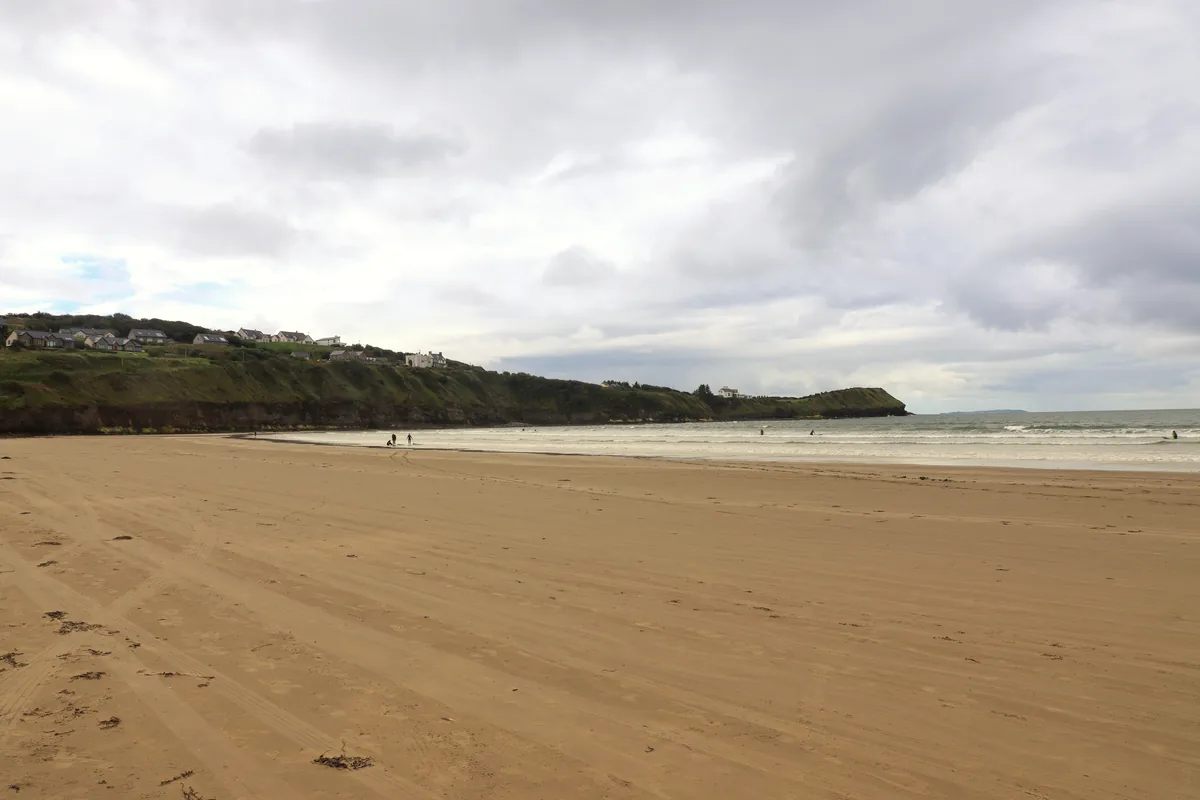
Where Is Rossnowlagh Beach?
Rossnowlagh sits in the very south of County Donegal, facing west across Donegal Bay towards the Atlantic. The beach is around 3 km of soft golden sand between the Coolmore cliffs in the south and the rocks at Carrickfad in the north. Officially it’s called Belalt Strand, but everyone simply knows it as Rossnowlagh Beach. You’ll find the beach access on Google Maps here. Ballyshannon is about 8 km to the south, Bundoran roughly a 15-minute drive away, and Donegal Town a little further north.
Can You Drive on Rossnowlagh Beach?
Yes, and that was the reason we came. Rossnowlagh is one of only a few beaches in the north-west of Ireland where cars are still allowed on the sand. Ramps lead from the road straight down onto the beach, and once you’re down you simply pick a spot and park. For us that was the best part of the day: no searching for a car park, no carrying bags across the dunes, just the van, the sand and the sea a few metres away.
That said, it’s not a free-for-all. Some sections of the beach are marked as no-car zones because the sand there is soft, and local volunteers regularly warn visitors after vehicles get stuck. In June 2025, Ocean FM reported that a van had driven past the signs and the buoys marking the no-car zone and got stuck in soft sand. So follow the signs, stay on the firm sand where other cars are parked, and don’t drive further than you need to.
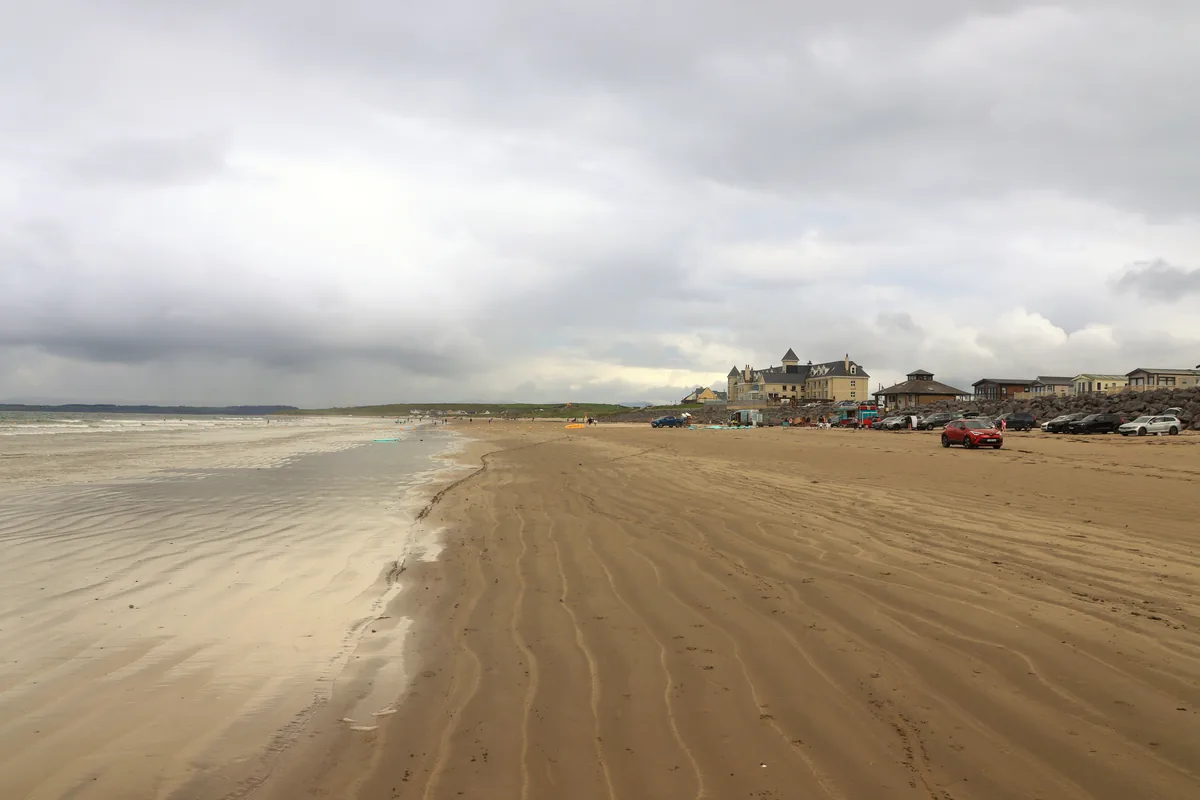
Watch the Tide: Parking at High Tide
This is the most important tip we can give: check the tide times before you drive onto the beach. When the tide comes in, the area you can park on gets very small. What looks like a huge, empty beach at low tide can shrink to a narrow strip.
This isn’t just a theoretical warning. In June 2026, a campervan was caught by the incoming tide on Rossnowlagh Beach and had to be pulled out by a tractor just in time, and it wasn’t the first time something like that has happened here. Park high up the beach, keep an eye on the water while you’re there, and leave well before high tide if you’re unsure.
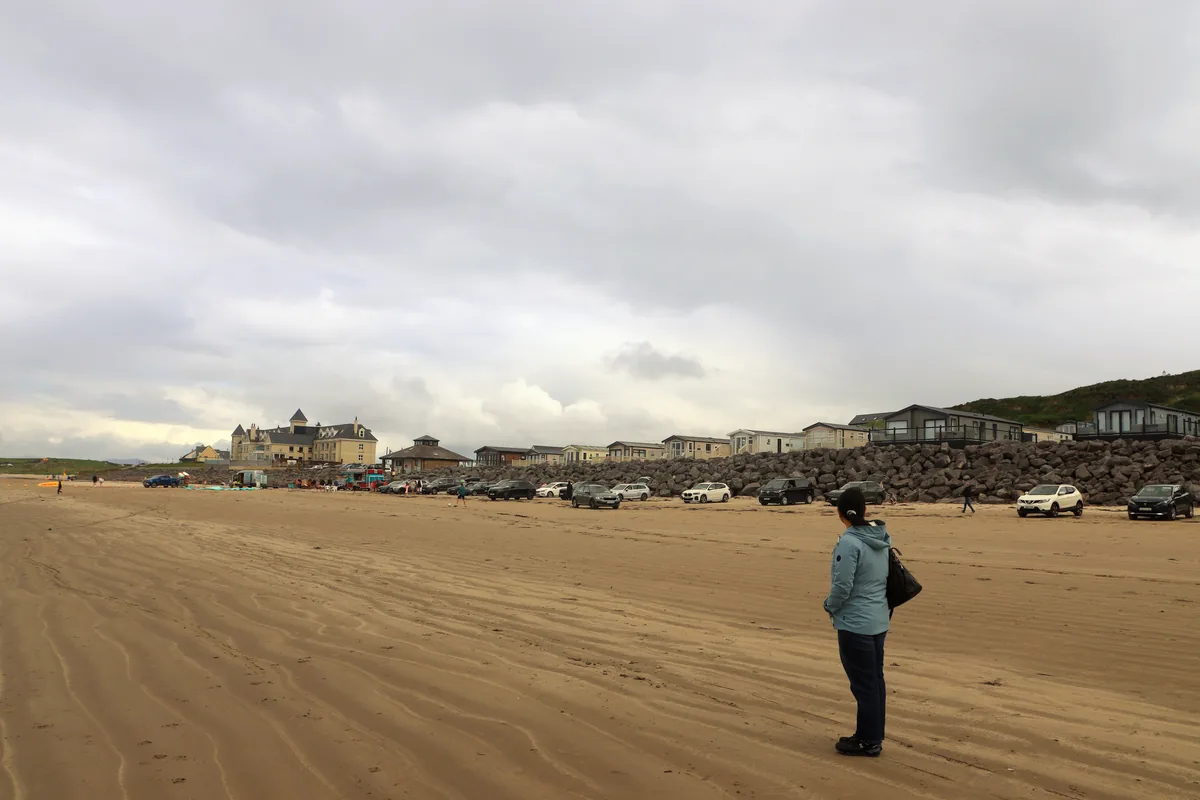
Rossnowlagh Beach with a Campervan
With our Ford Tourneo Custom, getting onto the beach and parking was easy. There’s no height barrier, the parking is free, and we didn’t have any problems with access. For bigger motorhomes the same rules apply even more: stay on firm sand, avoid the marked soft areas and plan around the tide, because getting a heavy vehicle out of soft sand is a lot harder than a car.
Overnight parking on the beach is not an option, so plan your night somewhere else. If you want to stay in Rossnowlagh itself, there is a touring park in the village, Boortree Touring & Camping.
Swimming, Lifeguards and Dogs
Even though the weather wasn’t perfect, we still managed to get into the water. Rossnowlagh is a Blue Flag beach, and according to Go Visit Donegal lifeguards are on duty during the summer season from June to September. Swim between the red and yellow flags; a red flag means it’s not safe to go in, and no flag means there’s no lifeguard on duty.
Rossnowlagh is also one of Ireland’s best-known surf beaches. The waves face straight into the Atlantic, and there are surf schools that offer lessons and board rental if you want to give it a try.
If you travel with a dog, note that dogs are not allowed on the beach, so this is one stop to skip or plan differently with a four-legged travel companion.
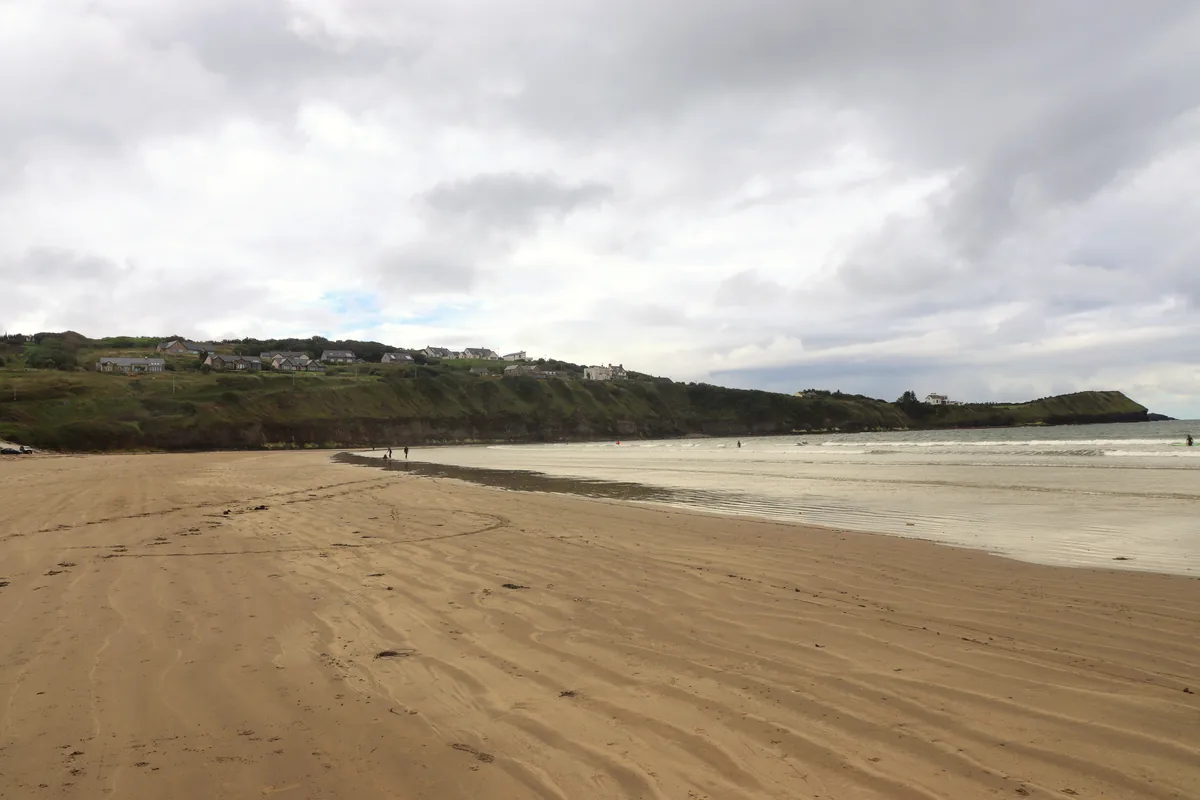
What We Pack for a Day at Rossnowlagh Beach
Just like at Black Rock Sands, you can park right on the sand here, so you can bring more than you would carry to a normal beach. The same beach kit always travels with us in the van, and this is what we take:
- Pop-up beach shelter: our own shelter against wind and sun is this quick-up beach tent with UPF 50+. It gives the whole family a place to sit out of the wind, right next to the van.
- Bodyboard: we use this light bodyboard with a leash, which is easy to throw in the boot. Rossnowlagh is a popular surf beach, but stay between the red and yellow flags when the lifeguards are on duty.
- Large beach towel: we use towels very similar to this XXL microfibre towel. They dry quickly and pack small.
- Swim vest for children: we also bring this swim vest for kids. It does not replace watching them, but it gives a bit more confidence in the water.
These are Amazon affiliate links. As an Amazon Associate we earn from qualifying purchases, at no extra cost to you.
Is Rossnowlagh Beach Worth Visiting?
For us, yes. The weather wasn’t ideal, but we still had two lovely hours on the beach and finally got our beach day. Being able to park directly on such a beautiful beach makes Rossnowlagh different from most beaches in Ireland, and for a van road trip it’s simply very convenient. If you’ve enjoyed drive-on beaches elsewhere, like Black Rock Sands in Wales, you’ll feel right at home here.
It’s less of a stop for people looking for quiet, untouched nature: cars on the sand are part of the picture, and in summer it can get busy.
Our Honest Takeaway
Rossnowlagh Beach is worth it, mainly because you can park on this beautiful beach. Drive down, pick a spot on firm sand, and enjoy a relaxed few hours by the sea. Just don’t forget the one rule that really matters here: check the tides before you go, because at high tide the parking area gets very small.
Our Rossnowlagh Beach stop on video
Driving onto the sand and parking our van right on the beach – here’s what Rossnowlagh looks like when you actually do it.
Rossnowlagh Beach: 🎥 Park the van on the sand with us – watch from 00:58.
Or watch the full video of our Donegal road trip day, from Rossnowlagh to Bundoran Adventure Park and back via Glenade Lough and the Gleniff Horseshoe.

Rossnowlagh Beach FAQ
Can you drive on Rossnowlagh Beach?
Yes. Cars can drive onto the beach via ramps and park on the sand. Some areas are marked as no-car zones because of soft sand, so follow the signs and stay where the sand is firm.
Is parking at Rossnowlagh Beach free?
Yes. When we visited, parking on the beach was free and there was no height barrier, so it worked well with our van.
Is it safe to park on Rossnowlagh Beach at high tide?
Be careful. At high tide the area you can park on becomes very small, and vehicles have been caught by the incoming tide in the past. Check the tide times before you drive onto the sand and park high up the beach.
Are dogs allowed on Rossnowlagh Beach?
No. Dogs are not allowed on the beach, so plan accordingly if you travel with a dog.
Can you stay overnight on Rossnowlagh Beach?
No. Overnight parking on the beach is not possible. There is a touring and camping park in Rossnowlagh village if you want to stay in the area.
Are there lifeguards at Rossnowlagh Beach?
Yes, during the summer season from June to September. Rossnowlagh is a Blue Flag beach and a popular surf spot, with surf schools offering lessons and equipment rental.
Plan your own trip
What we used on our Ireland road trip
📶 Mobile data
We used a local Three SIM — an eSIM is the easiest alternative if you want data from the moment you land. Get an Ireland eSIM from Airalo
🚁 Our drone
Most of our aerial shots were filmed with the Potensic Atom 2. Check the current price on Amazon
Some of these are affiliate links. If you book or buy through them, we may earn a small commission at no extra cost to you. It helps us keep the road trip — and this blog — going.
Where We Went Next
From Rossnowlagh we drove on to Bundoran, where we stopped at the seafront funfair so our daughter could have some fun after the long driving days. Read how it went, what the rides cost and where to park a van in our Bundoran Adventure Park post.
Watch the road trip
See Ireland from the driver's seat
Every stop on this blog is also on our YouTube channel — the drives, the detours and the van-life reality in between.
Subscribe on YouTubeOur Ireland road trip, stop by stop
← Previous stop: Erris Head Loop Walk, cliffs and wild views in north Mayo
Next stop → Bundoran Adventure Park, a seaside funfair in Donegal
⛴️ Planning your own trip over? Here’s how our 24-hour ferry from Dunkirk to Rosslare went.
🗺️ See every stop on our interactive Ireland road trip map.
Planning your own Wild Atlantic Way road trip? Check our Bundoran Adventure Park stop, our Erris Head Loop Walk post, our Dunmoran Beach stop, our Gleniff Horseshoe drive and our Ireland facts before you go.