There are places you visit once and places you keep coming back to. Woolacombe Beach is the second kind for us. We’ve returned four times now, and every single time the plan is the same: pack the van, head for North Devon, and spend as many hours as possible on that stretch of sand. If you’re wondering why one beach in North Devon keeps pulling us back across the Channel, this post should explain it.
Why Woolacombe Beach Is Different
Woolacombe Beach runs for over three miles along the North Devon coast, inside the North Devon Area of Outstanding Natural Beauty, with views out toward Morte Point and, on a clear day, Lundy Island sitting out in the Atlantic. It’s regularly ranked among the best beaches in Britain, and once you’ve stood on it at low tide, it’s easy to see why.
What makes it special isn’t just the length, it’s the width. At low tide the sand pulls back so far that the beach turns into this huge, flat, golden expanse — easily one of the biggest stretches of open sand we’ve walked on anywhere in the UK. There’s room for surfers, dog walkers, families with windbreaks and cricket sets, and you still never feel crowded. High tide changes the character completely, pushing the water right up toward the dunes, so the beach genuinely looks different depending on when you arrive.
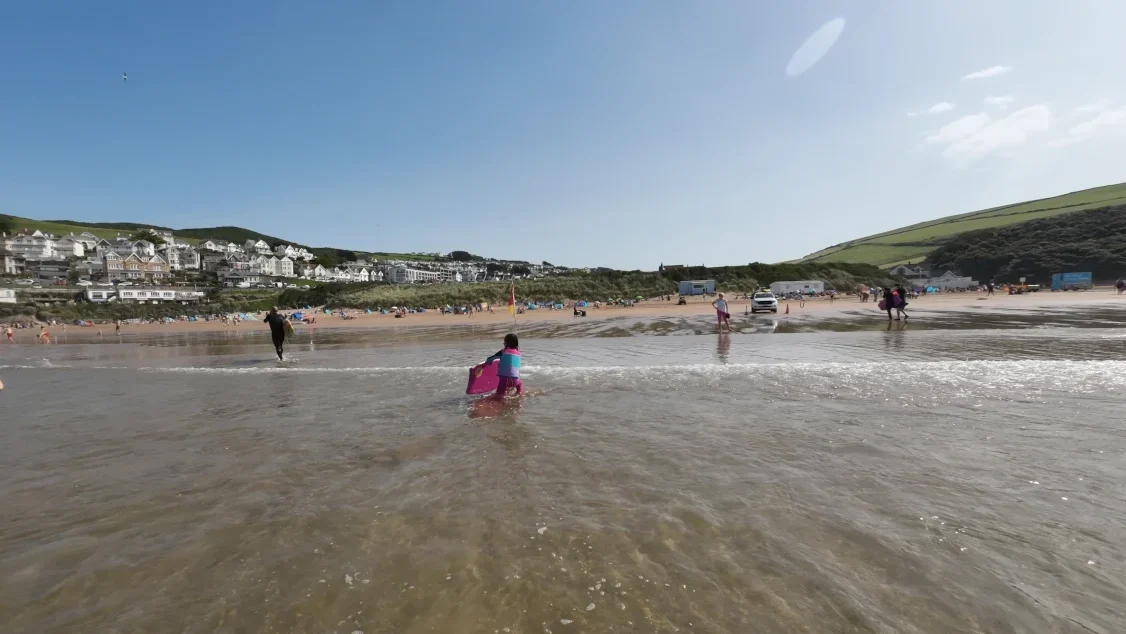
The sand itself is soft and pale gold, and the water has that proper Atlantic clarity to it. Woolacombe faces the open ocean, which means real swell rolls in — it’s one of the most popular surf beaches in the South West, with surf schools and board rental right along the beach road for anyone who wants to give it a try. Even if you’re not surfing, the waves make it a genuinely fun beach to just be in the water at, rather than a flat, sheltered cove.
Honestly, the beach is the whole reason we go to Woolacombe. We’ll say that more directly further down, but it’s worth being upfront about it here too.
Swimming, Surfing and Safety
Woolacombe has a seasonal lifeguard service that covers the main holiday periods, from around Easter through to late October, with full daily cover through the summer months. Flags mark the safe swimming and surfing zones — always worth checking before you go in, since the Atlantic swell here can throw up stronger currents than you’d expect from how gentle the beach looks at first glance.
If you’re new to surfing, this is a genuinely good place to learn, with several schools offering lessons and equipment hire right on the beach.
Dogs on Woolacombe Beach
This is one of the most common questions we get asked, and it’s a bit more nuanced than a flat yes or no.
The main, central section of the beach is not dog-friendly during the busy season. Roughly from Good Friday (or the 1st of April, whichever comes first) until the 30th of September, dogs aren’t allowed in the area between the rocks at the village end and the stream. A bit further south, between the stream and Mill Rock, dogs are allowed but need to be kept on a lead during the same period.
South of Mill Rock, toward Putsborough Beach, there are no seasonal restrictions at all — dogs are welcome there year-round. Outside the main season (roughly October to March), the restrictions on the central beach also relax significantly.
Since the beach is so long, even the restricted zones aren’t the end of the world if you have a dog with you — there’s still a lot of unrestricted sand to work with. That said, the zones are enforced, and it’s genuinely worth checking current signage or the official Woolacombe tourism site before you go, since the exact rules and enforcement times can shift slightly from year to year.
Parking at Woolacombe Beach
There are several car parks along the beach road and around the village, which is convenient, but here’s the catch: prices and conditions change with the season, and not always in a way that’s obvious in advance. What was a cheap, half-empty car park on our first visit was noticeably pricier — and busier — the next time we came back in peak summer.
Here’s a rundown of the options, based on what we’ve actually used:
- Esplanade Car Park — our regular choice. Pricing is variable and changes with the season, but there’s a handy trick: leave before 1pm and you only pay half. No height restriction, but there is a 6-metre length restriction, so check your van’s dimensions before heading in.
- Roadside parking toward Mortehoe — you can pay at a machine or via the RingGo app, which is convenient in theory. In practice, finding a free spot here is genuinely difficult, since spaces are frequently taken up by campervans.
- Sandy Burrows Car Park — also has direct beach access and is noticeably more spacious than Esplanade. The trade-off: you pay a fixed price for the day regardless of how long you actually stay, based on the season.
- Marine Drive National Trust Car Park — a bit further out, roughly a 5–10 minute walk to the main beach. Also has a 6-metre length restriction, but it’s usually the cheapest of the options listed here, which can make the short extra walk worth it.
Our honest advice either way: don’t assume the price or availability from a previous visit, or from what you read online, is still accurate. Check current signage or the official parking information before you arrive, especially if you’re coming in the school summer holidays when demand (and prices) both go up.
The Village Itself
We’ll be straightforward here: Woolacombe village is fine, but it’s not the draw. There are a handful of small shops, a few cafés and restaurants, and a mini-golf course tucked in near the beach that’s a nice way to fill an hour if the tide’s wrong or the weather turns. It’s a pleasant, low-key seaside village — but nobody is driving four times to North Devon for the mini-golf. The beach does all the heavy lifting here, and that’s exactly how we’d recommend planning your time: don’t expect a big day out in the village, expect a big day out on the sand.
Best Time to Visit Woolacombe Beach
Based on our four visits, August is the best month — warmest water, the most reliable weather, and the beach at its best for swimming and just lying around on the sand. The trade-off is obvious: August is also when Woolacombe is busiest, with car parks filling up and the beach at its most crowded.
If you want more space and don’t mind slightly cooler conditions, late spring or September can be a good compromise — still good weather odds, noticeably fewer people. But if warm water and reliable sun are the priority, August wins every time, crowds and all.
High Tide at Woolacombe Beach
We touched on this earlier, but it’s worth its own section: high tide at Woolacombe Beach changes the entire character of the beach. Instead of the vast, flat expanse of golden sand you get at low tide, the water pushes right up toward the dunes, and the usable beach area shrinks dramatically — sometimes down to a narrow strip near the car parks and the village end.
If you’re planning your visit around swimming, sunbathing, or just walking the sand, it’s worth checking the tide times before you go rather than showing up and hoping for the best. For accurate, official tide predictions, the Met Office publishes tide times for Woolacombe – Barricane Bay: Woolacombe Tide Times (Met Office).
Woolacombe Beach Caravan Park
We’ve also stayed at Twitchen House, a caravan park near the beach, on our visits — that deserves its own dedicated review post, since there’s a lot to say about the site itself, so we’ll cover that separately soon. Keep an eye on the blog for that one if you’re planning a longer stay in the area.
Here’s a quick look at the walk from Twitchen House down to the beach — handy if you’re staying nearby and want to know what to expect before you go.


The Scenic Drive from Mortehoe to Woolacombe
If you’re approaching Woolacombe from Mortehoe, the drive down towards the coast is almost an experience in itself. The road winds between stone walls and hillside homes before suddenly opening up to wide views across the turquoise sea — one of those moments that makes a North Devon road trip feel properly special.
Here’s a quick look at the drive from Mortehoe to Woolacombe and the view that opens up as you descend towards the beach.

Check the Woolacombe Beach Webcam Before You Go
Not sure what conditions look like right now? The official Woolacombe Beach webcam, run by Woolacombe & Mortehoe Tourist Information, gives you a live view of the beach — handy for checking the weather, how busy it looks, or roughly where the tide is before you set off. It’s one of the easiest ways to decide whether today’s the day for the beach or better spent exploring Mortehoe or the village instead.
Final Thoughts
We’ve done North Devon a handful of times now, and Woolacombe is the one place we always build the trip around. It’s not the village, it’s not the shops, it’s not even really the surf schools — it’s the sheer scale of that beach, the sand, and the sea. If you only have time for one beach in North Devon, this is the one we’d point you to.
If you’re planning your own trip, check the current dog zones and parking prices before you go, aim for August if warm water matters to you, and leave plenty of time — this isn’t a beach you rush.
Frequently Asked Questions
Is Woolacombe Beach dog friendly?
It depends on the season and which part of the beach you mean. From around Good Friday (or 1 April) to 30 September, dogs aren’t allowed on the main central section near the village, though the stretch between the stream and Mill Rock allows dogs on a lead during the same period. South of Mill Rock, toward Putsborough, dogs are welcome year-round with no restrictions. Outside the main season, the rules on the central beach relax significantly. Given how long the beach is, there’s always plenty of dog-friendly sand even during the restricted months.
Where’s the best place to park at Woolacombe Beach?
Esplanade Car Park is our regular choice — it has direct beach access and if you leave before 1pm you only pay half price. If you want more space, Sandy Burrows Car Park is roomier with a fixed daily price. For the cheapest option, Marine Drive National Trust Car Park is usually the best value, though it’s a 5–10 minute walk to the main beach. Prices and availability change with the season, so check current signage before you go.
Is parking free at Woolacombe Beach?
No, none of the main car parks are free, and prices vary by season and car park. Esplanade offers a half-price option if you leave before 1pm, and Marine Drive tends to be the cheapest overall, but exact prices shift year to year — don’t rely on what you paid last time or read online, check current signage when you arrive.
How long is Woolacombe Beach?
Woolacombe Beach runs for over three miles along the North Devon coast. At low tide, it widens dramatically into one of the biggest stretches of open sand in the UK; at high tide, the usable beach shrinks right up toward the dunes, so how “big” it feels depends heavily on when you visit.
Planning a road trip through North Devon? Check out our guides to Clovelly, Ilfracombe Harbour, and the Valley of the Rocks for more of the coastline.
Watch the road trip
See Ireland from the driver's seat
Every stop on this blog is also on our YouTube channel — the drives, the detours and the van-life reality in between.
Subscribe on YouTube