Aerial shots have been on my wish list for THE OVRTLND since day one. Watching other van life creators pull back to a wide drone shot of their rig parked on some empty coastline always made me a little jealous — but until recently, I had zero drone experience. None. I’d never even flown one of those toy quadcopters as a kid. So when it came time to actually buy a drone for the Tourneo Custom road trips, I wasn’t shopping like an expert. I was shopping like a total beginner trying not to waste money on something I might not even enjoy.
The DJI Problem: Great Drones, Painful Price Tags
Let’s be honest — if you type “best travel drone” into Google, DJI dominates every single result, and for good reason. The image quality, the flight stability, the app ecosystem — it’s all excellent. But it’s also expensive. Even DJI’s “entry-level” Mini series options quickly climb past the 400–500 euro mark once you add a Fly More combo, extra batteries, or ND filters.
That price made me hesitate. Not because I doubted DJI’s quality, but because I genuinely didn’t know if drone flying was something I’d stick with long-term. Would I actually use it on every trip? Would I get comfortable flying it, or would it end up sitting in a drawer after two flights? Spending 500+ euros to answer that question felt like the wrong move for someone starting completely from zero.
Enter the Potensic ATOM 2
That’s what led me to the Potensic ATOM 2. It’s positioned as a budget-friendly alternative to the DJI Mini series, and on paper it ticks a lot of the same boxes: a sub-249g weight class, 4K camera, and GPS-assisted flight modes — features you’d normally expect to pay a lot more for.
For my first drone, I didn’t need the absolute best sensor on the market. I needed something that would let me learn the basics — takeoff, landing, framing a shot, flying near the van without panicking — without me stressing over every scratch or crash the way I might with a much pricier machine.
Why the Extension Kit Made Sense
Instead of buying just the drone on its own, I went with the combo that includes two batteries, the standard remote controller, and a set of spare propellers — and the whole package came in well under 300 euros. For a first-timer, that extra battery matters more than people expect. Drone flight times are short, and when you’re out on location trying to capture the golden hour light hitting the van, you really don’t want to be stuck waiting an hour for a single battery to recharge.
I skipped the pricier bundles with the smart controller some retailers offer, mainly because I wasn’t ready to spend extra on a feature I hadn’t even tested yet. The standard remote paired with my phone was more than enough to get started.
The Part Nobody Talks About: Registration and Insurance
Here’s what caught me a little off guard after the order confirmation email landed in my inbox: buying the drone was the easy part. In Germany, flying a camera drone legally means dealing with the Luftfahrt-Bundesamt (LBA) before you even take it out of the box.
Any drone with a camera has to be registered with the LBA as part of the UAS operator registration, regardless of how light it is. Once registered, you get an e-ID number that has to be physically attached to the drone itself — no exceptions, even for something as small and lightweight as the ATOM 2. On top of that, drone liability insurance is legally required in Germany for every drone, no matter the size or weight class. Some private liability policies already cover drones, but plenty of older contracts don’t, so it’s worth checking the fine print — or getting a dedicated drone insurance policy, which typically isn’t expensive.
One thing worth flagging if you’re planning to do the same thing we are: since the footage from our flights is meant for our YouTube channel and not just personal use, a private liability policy isn’t enough. That kind of use counts as commercial, so a business drone insurance policy is required instead of the standard private one. If you’re planning to publish your footage anywhere public-facing — YouTube, a blog, social media — it’s worth checking with your insurer whether that pushes you into commercial territory too.
It’s not overly complicated once you know the steps, but it’s definitely not something that crossed my mind when I clicked “buy.” If you’re a first-time drone owner in Germany, budget some time — and a little paperwork patience — for this part before your first flight.
What’s Next
Right now, the ATOM 2 is registered, insured, charged, and sitting in the van, ready for its first real test. I’ve done a few backyard flights just to get comfortable with the controls, but I want to actually put it through its paces where it matters — out on the road, framing the Tourneo Custom against a proper landscape, testing the 4K footage in real travel conditions, and checking battery life on location.
So consider this the “why,” not the “how.” Once we’re back from our next trip, I’ll be publishing a full, honest Potensic ATOM 2 review — footage samples, battery performance, flight stability, and whether this budget drone actually delivers enough to justify skipping DJI. If you’re on the fence about your first drone for van life or road trip content, that follow-up post is the one you’ll want to read.
Stay tuned — always in motion.
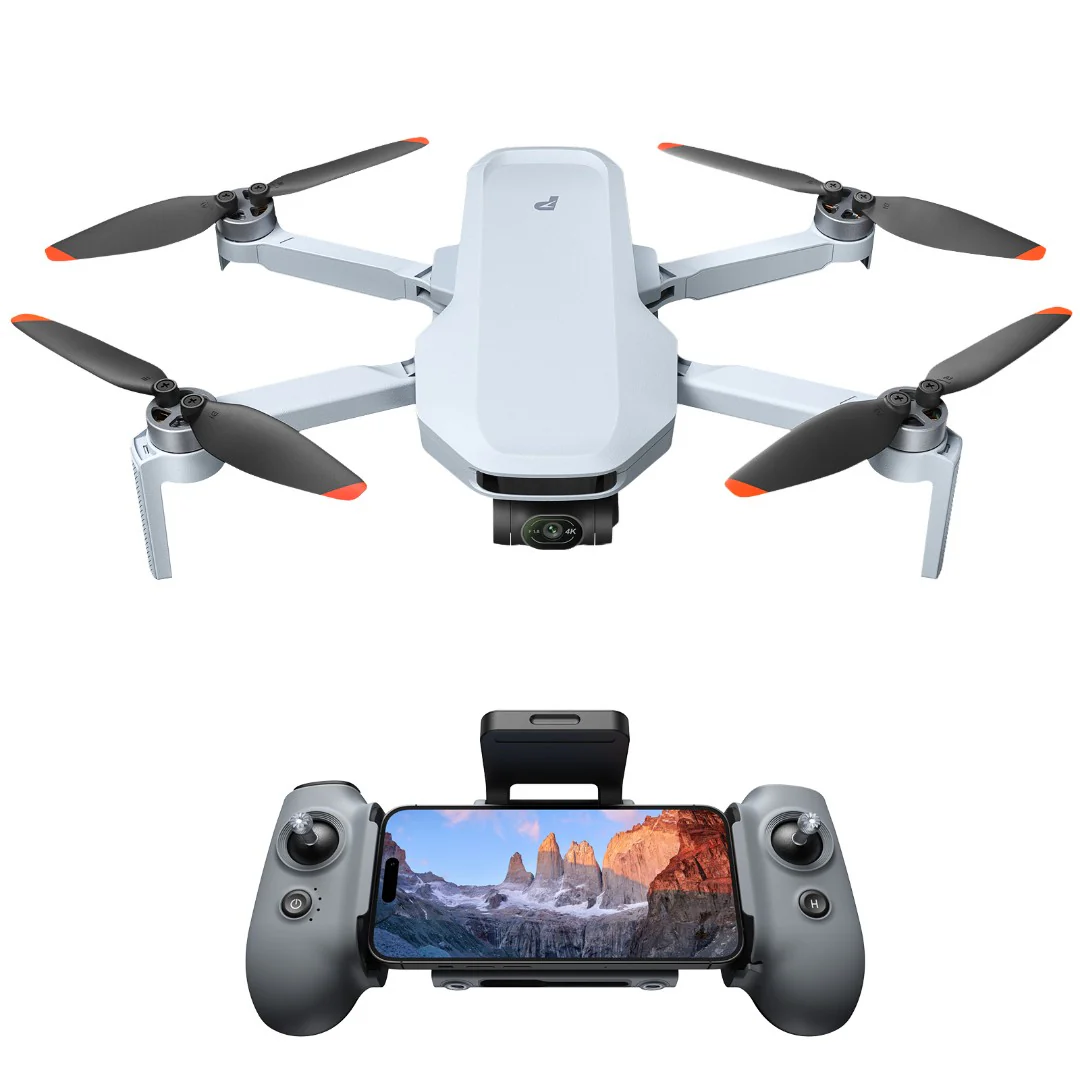
Potensic ATOM 2 Travel Drone
A lightweight foldable drone with an 8K camera, 3-axis gimbal, and AI tracking. Great for road trips, landscape shots, and smooth travel footage without carrying bulky gear.
Watch the road trip
See Ireland from the driver's seat
Every stop on this blog is also on our YouTube channel — the drives, the detours and the van-life reality in between.
Subscribe on YouTube